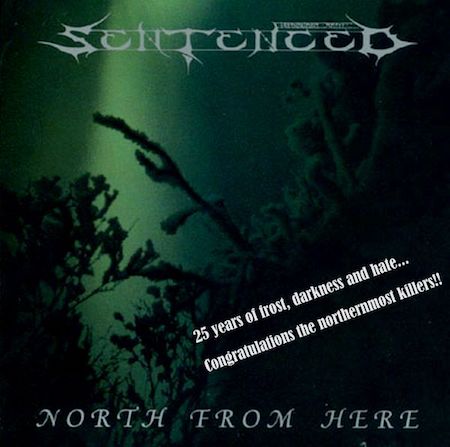
When the Death Metal scene exploded in the early ‘90s, Finland was no exception. Many bands were trying their best to separate from the pack and Finnish bands really pushed the envelope hard to sound different than your already familiar Entombeds, Morbid Angels, Obituarys, Deaths and so on.
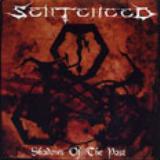
One of these acts was a band named Sentenced, formed in 1989 in Muhos in the north of Finland. They released their debut album, Shadows of the Past, on France’s Thrash Records in 1992 and it put them in the same league with other Finnish extreme acts like Amorphis, Convulse, Funebre, Xysma, Purtenance, etc. The album was well crafted but lacked its own identity. That was also the only Sentenced album on which the band’s main songwriter, Miika Tenkula (R.I.P.), took care of the vocals.
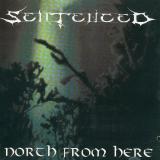
It was the band’s follow-up, North from Here, that can be considered a real game changer. On this record, bassist
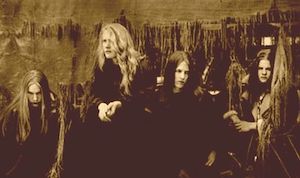
2018 marks the album’s 25th anniversary and we here at the headquarters of The Metal Crypt decided to contact the band’s drummer, Vesa Ranta and asked him to return to the making of North from Here some 25 years ago and comment on how it changed things for Sentenced.
Vesa politely took his time and gave us some his thoughts on the Death Metal masterpiece, better known as North from Here.
Luxi: It’s amazing that it’s been 25 years since Sentenced’s second album, North from Here, was released. I mean, it still sounds amazingly fresh, having nicely withstood the test of time. What are your thoughts about this second Sentenced creation 25 years later?
Vesa: Time goes incredibly fast. I personally cannot imagine it’s been that long time since it was released. In my book, North from Here is one of the clear milestones of Sentenced’s whole career and one of the top three records in our catalogue. A lot of
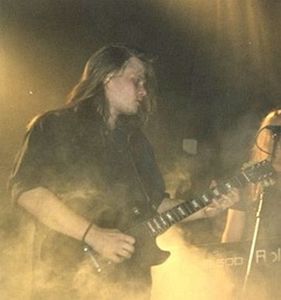
Luxi: When was the last time you listened to it from start to finish?
Vesa: I believe it was a couple of years ago when I listened to the entire vinyl version. It was a pretty nostalgic experience. I was wondering where all that rage and anger came from that we captured on the record. The album sounds real and uncompromising. We were fully extended to the limits of our skills when making it for sure. ;o)
Luxi: Even though North from Here was just the band’s second outing, you went through a major musical metamorphosis compared to how you sounded on your debut album, Shadows from the Past. What caused this transformation from a full-blooded Death Metal outfit to a harsher and more technical and atmospheric band on the second record? I guess there’s more than one reason, right?
Vesa: This is a tricky question. We felt that when we recorded our debut album, Shadows of the Past, our musical
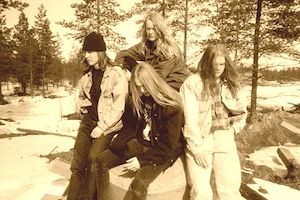
The colder and more atmospheric sound that we had incorporated on our 3-song Journey to Pohjola promo was continued and sharpened even further on North from Here.
Luxi: Lyrically, the band took a more serious approach on this record, dealing with Finnish military history and mythology, a clear improvement from the somewhat typical Death Metal lyrics that you had on your debut record. Was this a calculated move?
Vesa: This is a bit tricky for me to answer because I was not responsible for the lyrics. However, I remember that Taneli (Jarwa, ex-Sentenced vocalist) was interested in northern mythology at that time and was also inspired by Kalevala. Quite soon it became clear to us that another Finnish band was drawing its influence from Finland’s national epic, Kalevala. The lyrics had an important role for the band even back then.
Luxi: When the album was released back in 1993, a lot of comparisons were drawn to the Floridian tech-Deathsters Atheist. Were some of you inspired directly by Atheist when you were composing the songs for N.F.H.?
Vesa: Atheist was indeed in heavy rotation back in those days, but as I said, the main composer Miika was not a hard music fan. However, he probably got the impression from the rest of his bandmates that had started digging more progressive Metal.
Luxi: How much do you remember from the studio sessions for N.F.H. when you had Ahti Kortelainen at the production helm? Did he use his severe whip to get the band to sound as tight and pro as possible or were those sessions somewhat easy for you?
Vesa: In fact, I remember those recording sessions pretty well. We recorded the album in the middle of the coldest wintertime and the whole band lived in a cold-as-hell camper. Even though we had rehearsed hard before the actual recording session, it took
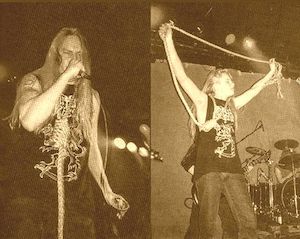
Luxi: Before you entered Tico-Tico Studio to record your follow-up album, did you rehearse the songs so there was very little need for improvisation while in the studio?
Vesa: At that time, we practised really hard, about 4-5 times a week. The band really was at the centre of our life back in those days. We also got a new, good rehearsal place for the band during the song composing period. I remember we did a lot of recordings at that time with a really basic piece of equipment that we had. We had recorded a bunch of our rehearsal sessions on C-tapes and those tapes were a great help to get a picture of what type of material we had come up with and if there was something in the song arrangements that we should rework a bit more, etc. All this reminds me, I should dig up some of those rehearsal tapes from my own C-cassette collection.
Luxi: While you had locked yourselves up at Tico-Tico Studio in Kemi, Finland, did anything bizarre or hilarious happen, perhaps caused by your nonstop booze parties?
Vesa: As I mentioned already, the recording sessions for N.F.H. was overall really intense for us. I do not remember anything special related to those sessions. Miika’s knife incident, however, did mess up our timetables a bit.
Luxi: The album was originally released on Spinefarm Records, but it was also licensed to Century Media Records relatively soon after. Do you see your second album as one that started opening new doors for the band?
Vesa: This album was definitely a successful album for us, which brought us a lot of attention and grabbed the interest of
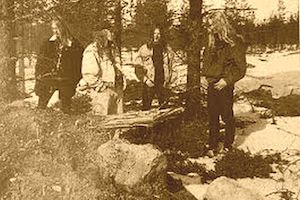
Luxi: Spinefarm Records did quite a lot of promotion for your second album and undoubtedly wanted to keep the band on their band roster. Was it a difficult decision to leave and sign a new multi-album deal with Century Media Records?
Vesa: I do not remember Spinefarm’s part in all this so well. Obviously, they did some promotion for us at some of the Central European record label meetings, but that’s all they did for us in order to get our name around a bit more I am afraid. At the end of the day, switching from Spinefarm to Century Media was an obvious decision for us. The record company had a clear vision of getting us to
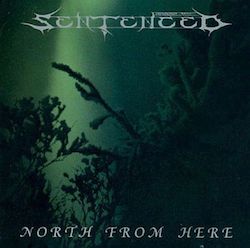
Luxi: In my opinion, the band’s second album lifted Sentenced up to the big league, giving you the needed boost to become recognized on a wider scale worldwide. Do you remember how it affected your comings and goings?
Vesa: I remember that N.F.H. was very well received by the fans and the media. The album reviews were good and people around the world became more interested in the band. All this attention felt good, of course, because we had invested so much our resources in this record.
Luxi: How highly do you rate N.F.H. personally, among other Sentenced albums? Do you still feel very close to this significant and still so relevant work?
Vesa: For me personally, three of the most important Sentenced albums are The Cold White Light, Funeral Album and last, but not least N.F.H. The latter one is one of our best albums, as far as song material and atmosphere are concerned
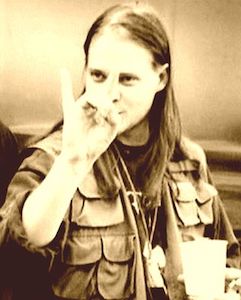
Luxi: Lastly, if you were forced to name just one personal favourite song of yours off the album, which song would it be and why?
Vesa: I would say "Fields of Blood, Harvester of Hate". It’s tough to select just one song from the album but this particular song crystallizes the album’s overall atmosphere very well. It’s a technical song that also has a great atmosphere. There are also Miika’s clean vocals on the chorus and I believe it was the first time for him singing clean songs on a record.
Luxi: That was it. I for one, want to thank you Vesa for the opportunity to talk about this masterpiece of an album. To conclude this interview, the last words are left rightfully to you...
Vesa: Thanks for the interview. It was just fun to go back to some of those old memories for a moment. I wish nothing else but all the best for the readers of The Metal Crypt. Listen to good music and do the things you like!